How Does a Circuit Breaker Protect Your Power System?
Table of Contents
-
What is a Circuit Breaker and Why Use It?
-
How Our Product Works: Technical Specification of the Circuit Breaker
-
How to Choose Between Outdoor Vacuum Circuit Breaker and Indoor Vacuum Circuit Breaker
-
Why Choose Our Brand – SYHF – and How to Contact Us
What is a Circuit Breaker and Why Use It?
In modern power systems, a circuit breaker is a fundamental protective component. As defined in electrical engineering, a circuit breaker is an automatic switching device that interrupts current flow when abnormal conditions—such as overloads or short-circuits—occur, thus protecting equipment and preventing fire hazards.
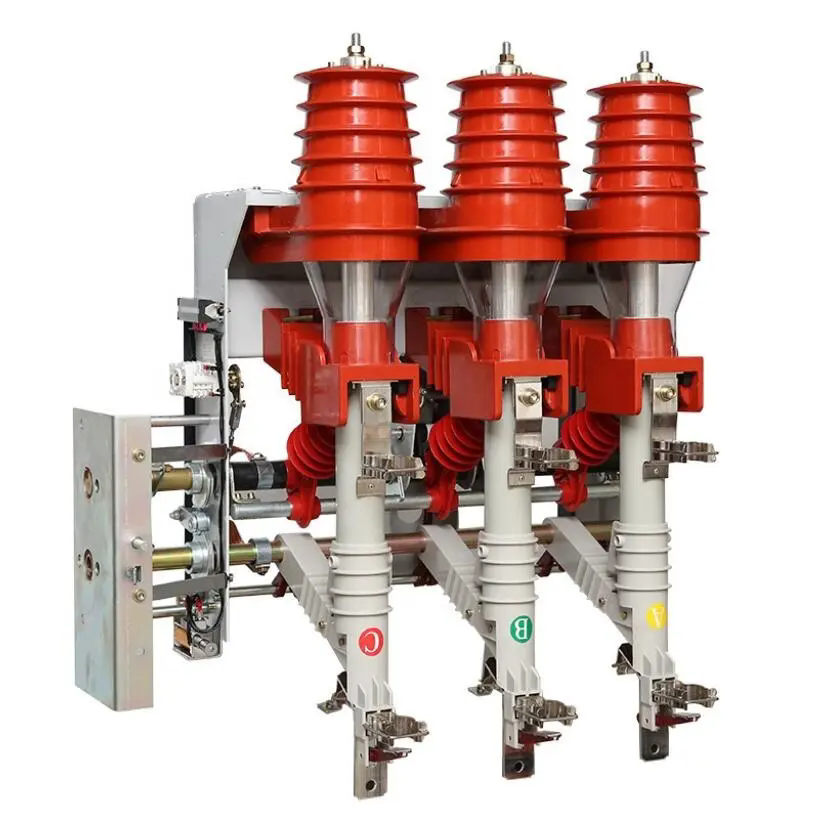
Specifically, the type known as a vacuum circuit breaker (VCB) uses vacuum as the medium for arc extinction when the contacts open. This technology ensures very rapid arc interruption and high insulating performance.
Why use a vacuum circuit breaker?
-
It provides fast interruption of fault currents because the vacuum medium does not support sustaining the arc.
-
Maintenance requirements are reduced compared to oil- or gas-insulated breakers thanks to fewer consumables and no arc-quenching gas leakage.
-
It is environmentally friendlier: no SF₆ gas (in many cases), no oil required.
-
It helps protect sensitive equipment and ensures system stability by offering reliable switching performance for medium-voltage systems (typically 3 kV-40 kV or medium voltage networks).
How Our Product Works: Technical Specification of the Circuit Breaker
Below we present the detailed specification of our circuit breaker product, which has been engineered for high performance, reliability, and flexibility across both indoor and outdoor installations.
Key Specifications
| Parameter | Value | Notes |
|---|---|---|
| Rated voltage (AC) | Up to 40.5 kV (for indoor series) / Up to 33 kV or higher (for outdoor series) | Aligns with standard medium-voltage levels. |
| Rated current | 630 A (standard) up to higher values depending on model | Example: outdoor model ZW7-33 kV uses 630 A rated current. |
| Short-circuit breaking current | Up to 31.5 kA or more depending on model | Outdoor example: ZW7-33 kV short-circuit breaking current of 31.5 kA. |
| Interruption medium | Vacuum interrupter | Provides fast arc extinction and long life. |
| Mechanical life | Typically > 2,000 operations (varies by model) | Ensures long operational life in service. |
| Protection rating / Environmental protection | Indoor units: IP40-52; Outdoor units: IP55+ and weather-resistant enclosure | To withstand environmental conditions. |
| Maintenance interval | Minimal – designed for low maintenance | Vacuum interrupter design reduces wear. |
| Application environment | Indoor switchgear rooms (metal-clad) and outdoor substations / pole-mounted installations | Flexible deployment. |
Features & Benefits
-
The vacuum interrupter ensures that the arc is extinguished quickly because in vacuum a sustaining arc cannot persist.
-
Compact design for indoor installation: smaller footprint, lighter weight, easier integration into metal-clad switchgear.
-
Robust weather-proof construction for outdoor installation: can withstand rain, dust, UV exposure, temperature extremes.
-
Low maintenance reduces life-cycle cost and improves uptime.
-
Wide range of ratings allows selection for the specific load and fault-current profile of your system.
How to Choose Between Outdoor Vacuum Circuit Breaker and Indoor Vacuum Circuit Breaker
When selecting a vacuum circuit breaker, location and environment are crucial factors that influence design, performance, and cost. Below we describe and compare the two main deployment categories: outdoor and indoor.
Outdoor Vacuum Circuit Breaker
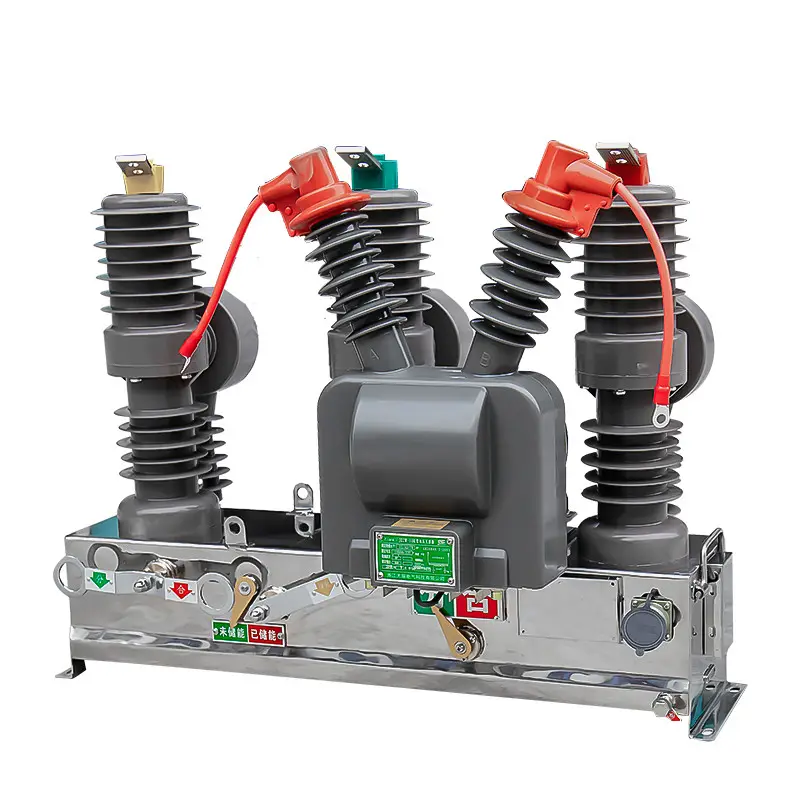
An outdoor vacuum circuit breaker is specifically designed for installation in open-air substations, pole-mounted applications, or remote sites where the equipment will be exposed to the elements.
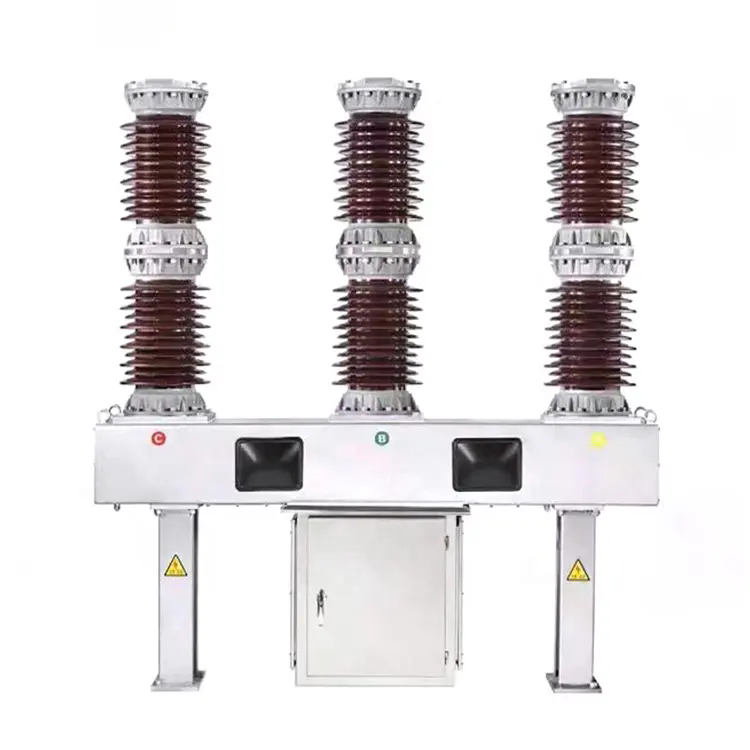
Key considerations for outdoor use:
-
Must have a sealed, rugged enclosure with high protection rating (e.g., IP55+).
-
Must be able to operate reliably despite exposure to rain, dust, wind, extremes of temperature, UV radiation, possibly contamination.
-
Creepage distances, insulation clearances, and structural design are more demanding because of outdoor exposure.
-
Accessibility and maintenance may be more difficult; therefore reliability and low-maintenance design are more critical.
Indoor Vacuum Circuit Breaker
An indoor vacuum circuit breaker is designed for installation inside a building or switchgear room in a controlled environment—such as commercial buildings, industrial plants, data centres, or indoor utility rooms.
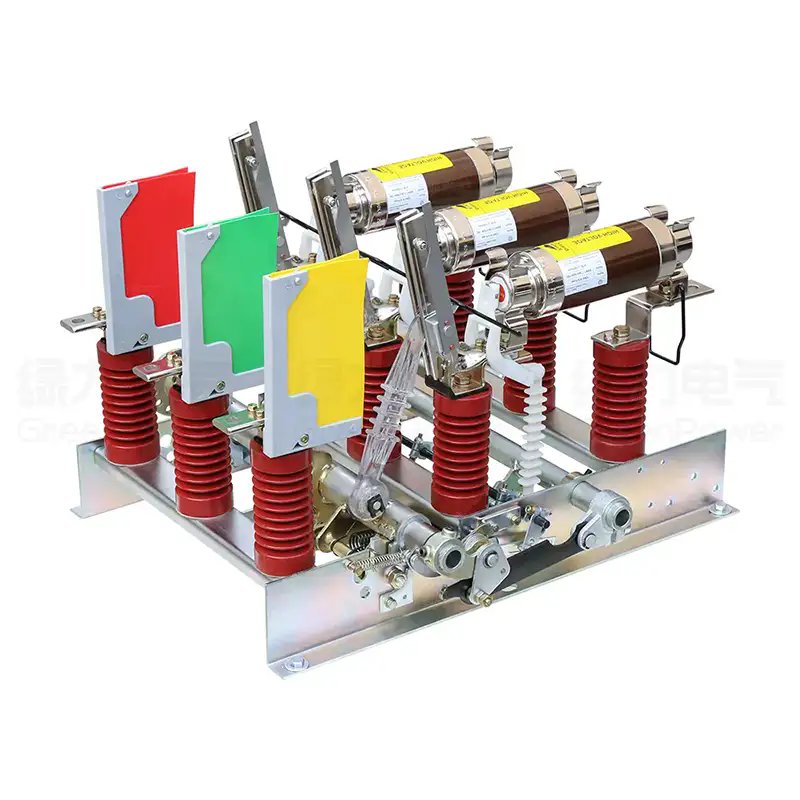
Key considerations for indoor use:
-
Environment is more controlled (temperature, humidity, dust) so design may be more compact, simpler.
-
Maintenance access is easier; integration into metal-clad switchgear is simpler.
-
Cost tends to be lower than outdoor variant because enclosure, environmental design demands are less.
Comparative Table
| Feature | Indoor Vacuum Circuit Breaker | Outdoor Vacuum Circuit Breaker |
|---|---|---|
| Installation location | Enclosed spaces / switchgear rooms | Open air substations / poles |
| Environmental exposure | Controlled (limited weather exposure) | High exposure (rain, wind, UV, dust) |
| Protection rating | Moderate (e.g., IP40‐IP52) | High (e.g., IP55+ or bespoke weatherproof) |
| Size & design | More compact, lighter | Larger, more rugged enclosure |
| Maintenance access | Easier (indoor room) | More challenging (outdoor site) |
| Cost of installation | Typically lower | Higher due to structure/enclosure and site demands |
| Best application | Commercial/industrial buildings, indoor switchgear | Utility substations, remote installations, pole-mounted grids |
How to decide which to use
-
Ask: Where will the breaker be located? If it is outdoors and exposed, then outdoor type. If indoors, then indoor type.
-
Ask: What level of environmental stress exists? High temperature swings, dust, moisture → favour outdoor design.
-
Ask: What is the budget and maintenance capacity? Outdoor installations may require more upfront cost and complexity.
-
Ask: What fault-current level and voltage rating are needed? Ensure whichever type you choose meets the technical specs of your system.
In many cases, the careful selection of the correct type avoids costly mistakes later—such as installing an indoor unit in an exposed outdoor site, which may lead to short life or failures.
Why Choose SYHF and How to Contact Us
Our brand, SYHF, specialises in delivering high-quality vacuum circuit breakers tailored for both indoor and outdoor applications. With decades of expertise in electrical switchgear, we ensure that you receive equipment with the right specification, robust construction, and long service life.
By choosing SYHF’s circuit breakers, you benefit from:
-
Precise engineering for your system’s voltage, current and site-specific requirements.
-
A broad range of models covering indoor and outdoor deployments.
-
Low-maintenance, reliable vacuum interrupter technology that reduces overall cost of ownership.
-
Comprehensive technical support, documentation and after-sales service.
For further information about our products, specification matching, customisation and pricing, please contact us. Our team at SYHF is ready to guide you through the selection process, ensuring the right choice for your power system and protecting your investment.
Common Questions & Answers about Circuit Breakers
Q: What is a vacuum circuit breaker and how does it operate?
A: A vacuum circuit breaker uses a vacuum-sealed interrupter chamber to extinguish the arc when circuit contacts open. The vacuum provides high dielectric strength and rapid arc quenching, making it very effective for medium and high voltage applications.
Q: Can I use an indoor vacuum circuit breaker outdoors?
A: Generally no. Indoor units are designed for controlled environments and may lack the sealing, structural robustness and insulation clearances required for outdoor exposure. Using them outdoors may lead to reduced lifespan or failure.
Q: What maintenance is required for a vacuum circuit breaker?
A: Maintenance is minimal compared to older technologies. Key checks include periodic mechanical operation tests, contact wear inspection, and ensuring the enclosure integrity. Vacuum interrupters are durable and require less frequent service if installed correctly and in a suitable environment.
For a reliable partner and product line, SYHF stands ready to provide expert guidance and quality equipment. Please don’t hesitate to contact us for your next project.
Related News
- How to Select and Apply Gas Load Break Switches for Medium Voltage Distribution Networks?
- How a Circuit Breaker Protect Your Power System?
- SYHF 6300 kVA Three Phase Oil Immersed Transformer Gains Widespread Acclaim in Azerbaijan, Featured on Local Television
- Can Your Electrical Mini Substation Be Installed in Underground Parking?
- Why Choose a Dry Type Transformer?
- How can an Electrical Substation become the most reliable asset in my grid?
Leave me a message