Which 15000 KVA Oil Immersed Self Cooled Transformer Meets Your Needs?
Article Summary
A 15000 KVA oil immersed self cooled transformer is a high-capacity electrical device designed to transfer power between voltage levels while maintaining the supply frequency. It uses insulating liquid to support electrical insulation and heat transfer, with heat released to the surrounding air through the tank and radiators. Selecting the right transformer requires more than matching a 15,000 kVA nameplate rating. Buyers must evaluate primary and secondary voltages, load characteristics, cooling performance, impedance, losses, installation conditions, protection, and applicable standards. This guide explains the main technical considerations, purchasing criteria, maintenance practices, and questions to ask a manufacturer. It also outlines how SYHF (Jiangsu) Electric Co., Ltd. can be approached for product specifications and project quotations.
01 · Product Fundamentals
Understanding a 15000 KVA Oil Immersed Self Cooled Transformer
Reliable electrical power is essential for manufacturing plants, utility substations, infrastructure projects, and other facilities with substantial energy demands. When electrical systems need to transfer large amounts of power between voltage levels, transformer capacity and thermal performance become critical design considerations.
A 15000 KVA Oil Immersed Self Cooled Transformer, also written as a 15,000 kVA or 15 MVA transformer, has a rated apparent power of 15 megavolt-amperes. Its primary function is to step voltage up or down according to the electrical system design while providing electromagnetic energy transfer between windings.
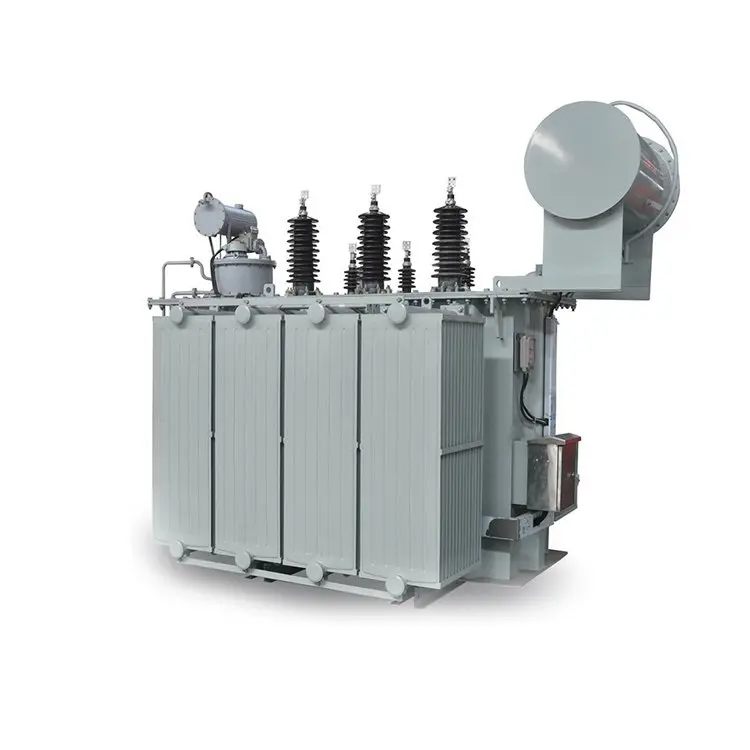
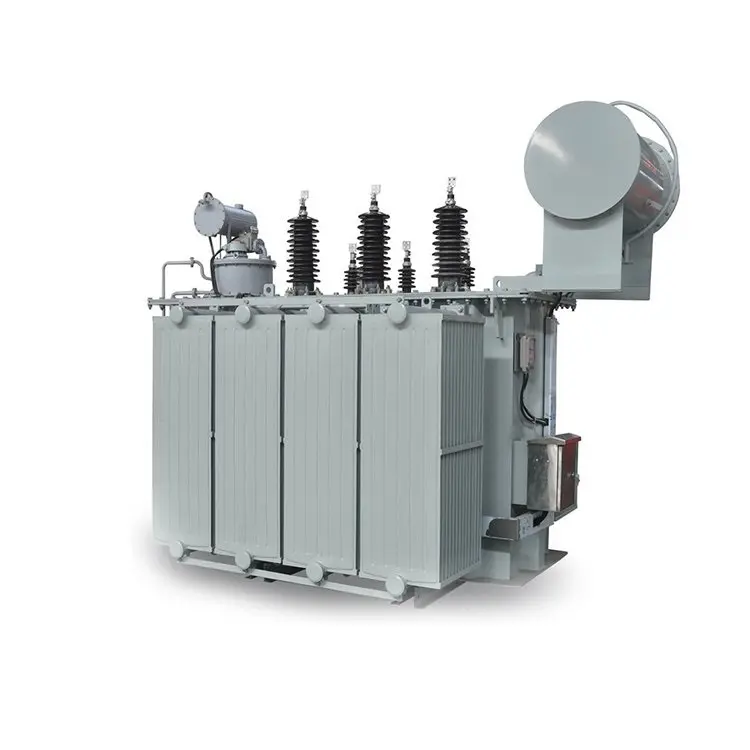
In an oil-immersed design, the core and windings are housed inside a tank containing insulating liquid. The liquid provides electrical insulation and carries heat away from internal components. In a self-cooled configuration, heat is transferred from the liquid to the tank and radiators, then dissipated into the surrounding air through natural circulation and convection.
For many designs, this cooling arrangement is identified as ONAN: Oil Natural Air Natural. However, the exact cooling designation must be confirmed from the manufacturer's nameplate and technical documentation.
For engineering teams and purchasing managers, the key objective is to specify a transformer that meets actual operating conditions, complies with project requirements, and supports dependable long-term service.
Important distinction: A 15,000 kVA rating represents apparent power, not a guaranteed active-power output of 15 MW. The corresponding active power depends on the load power factor. At a power factor of 0.9, for example, 15,000 kVA corresponds to 13,500 kW.
02 · Operating Principle
How a 15000 KVA Oil Immersed Self Cooled Transformer Works
The transformer operates through electromagnetic induction. When alternating current flows through the primary winding, it creates a changing magnetic flux in the core. This magnetic flux induces voltage in the secondary winding, enabling electrical energy to be transferred at a different voltage level.
Voltage Transformation
The relationship between primary and secondary voltage is determined primarily by the turns ratio of the windings. The required voltage configuration depends on the incoming supply, distribution network, and connected loads. A transformer designed for a 33 kV primary system, for example, should not be assumed suitable for a different voltage class without confirming its nameplate and insulation ratings.
Oil-Based Insulation and Heat Transfer
Electrical losses occur in the core and windings during operation. These losses produce heat, which must be removed to keep temperatures within the limits of the insulation system. The insulating liquid absorbs heat from internal components and transfers it toward the tank and radiator surfaces.
Natural Cooling Without Continuous Fan Operation
In an ONAN arrangement, heated liquid rises and cooler liquid descends, creating natural circulation. Ambient air removes heat from the external surfaces. Because the cooling process does not rely on continuously operating cooling fans or oil pumps, the design can simplify auxiliary equipment requirements.
Nevertheless, natural cooling does not eliminate the need for adequate ventilation, radiator clearance, temperature monitoring, or suitable environmental conditions. The transformer's allowable loading must be determined from its rated design and operating documentation.
03 · Design Advantages
Key Advantages of a Self-Cooled Oil Immersed Transformer
1. High-Capacity Power Transfer
A 15 MVA transformer can serve electrical systems with substantial apparent-power requirements. It may be appropriate for large industrial facilities or substations when its voltage levels, impedance, fault withstand capability, and thermal rating match the project design.
2. Integrated Insulation and Cooling
The insulating liquid performs two essential functions: dielectric insulation and heat transfer. A properly engineered oil-immersed system can support stable operating temperatures when it is correctly specified, installed, and maintained.
3. Reduced Dependence on Mechanical Cooling Equipment
Compared with designs that require forced-air fans or oil pumps, a self-cooled transformer can have fewer cooling auxiliaries. This can reduce auxiliary power demand and avoid certain fan- or pump-related maintenance tasks. It does not mean the transformer requires no maintenance, nor does it guarantee lower total operating costs in every installation.
4. Adaptability to Outdoor Substations
Oil-immersed power transformers are commonly used in outdoor electrical installations. Tank construction, surface protection, bushings, cable or bus connections, and protection accessories must be selected to suit the local climate and electrical layout.
5. Configurable Project Specifications
Voltage ratings, winding materials, vector groups, tap changers, impedance, terminal arrangements, and monitoring accessories can vary by project. Buyers should specify the required configuration rather than relying solely on the capacity rating.
04 · Engineering Parameters
Important Technical Specifications for a 15000 KVA Transformer
Reviewing technical parameters before requesting a quotation helps prevent mismatches between the transformer and the electrical system. The following table identifies common specification items. It is a procurement reference, not a substitute for the approved datasheet of a particular model.
| Parameter | What Buyers Need to Confirm | Why It Matters |
|---|---|---|
| Rated capacity | 15,000 kVA | Establishes the rated apparent-power capability under specified conditions. |
| Primary voltage | Project-specific, such as 33 kV where applicable | Must match the supply network and insulation requirements. |
| Secondary voltage | Required distribution or utilization voltage | Determines compatibility with downstream equipment. |
| Cooling method | Confirm ONAN or the specified cooling designation | Defines the rated cooling arrangement and operating conditions. |
| Frequency and phase | 50 Hz or 60 Hz; single-phase or three-phase as specified | Must match the electrical system design. |
| Vector group | Specified winding connections and phase displacement | Affects system compatibility and parallel operation. |
| Impedance | Guaranteed percentage and applicable tolerance | Influences fault current and voltage regulation. |
| Losses | Guaranteed no-load and load losses | Helps assess lifetime energy costs. |
| Insulation and temperature rise | Specified insulation levels and temperature limits | Supports thermal and dielectric performance verification. |
| Tap changer | Type, tapping range, and operating method | Supports voltage adjustment within the approved design. |
| Protection and accessories | Required alarms, indicators, pressure protection, and relays | Supports monitoring and fault response. |
Why Project-Specific Datasheets Matter
Two transformers with the same rated capacity may differ substantially in voltage, dimensions, impedance, losses, winding materials, insulation levels, and accessories. These differences affect installation, system performance, and total project cost.
For this reason, buyers should request a guaranteed technical datasheet and an outline drawing before finalizing procurement. Standards such as the applicable parts of IEC 60076 can provide a framework for requirements and testing, subject to the contract and local regulations.
05 · Application Scenarios
Where Can a 15000 KVA Oil Immersed Self Cooled Transformer Be Used?
A 15 MVA transformer can be considered for applications that require substantial power transfer. Suitability depends on the voltage system, load profile, environmental conditions, network design, and required redundancy.
Industrial Manufacturing Facilities
Large factories may use power transformers to supply production lines, motors, process equipment, and auxiliary systems. Engineers should examine motor starting requirements, harmonic-producing loads, demand peaks, and future expansion plans.
Utility and Private Substations
Substations use transformers to connect different voltage levels in transmission and distribution networks. The selected transformer must coordinate with switchgear, circuit breakers, protective relays, grounding arrangements, and the site's fault-level requirements.
Mining and Heavy Industry
Mining operations and heavy industrial sites can have variable loads, challenging environmental conditions, and significant motor demand. Site altitude, ambient temperature, dust exposure, transport access, and maintenance resources should be reviewed during design.
Infrastructure and Large Commercial Developments
Infrastructure facilities may need high-capacity power distribution for interconnected buildings, pumping systems, transport support facilities, or other large electrical loads. Load forecasts and contingency planning help determine whether one large transformer or multiple units provide the more appropriate arrangement.
Engineering reminder: The rated capacity alone does not establish application suitability. A qualified electrical engineer should verify load calculations, fault levels, protection coordination, site conditions, and the applicable electrical codes.
06 · Selection Process
How to Select the Right 15000 KVA Oil Immersed Self Cooled Transformer
A structured selection process helps buyers reduce technical uncertainty and obtain comparable quotations from different manufacturers.
Step 1: Calculate the Actual Load Requirement
Identify the maximum demand, expected load growth, operating schedule, and power factor. Consider continuous loads, short-duration peaks, motor starting, and any nonlinear loads that may influence transformer performance.
Step 2: Define the Voltage Configuration
Confirm the primary and secondary voltage ratings, frequency, phase arrangement, neutral requirements, and vector group. If parallel operation is planned, compatibility requirements must be established in advance.
Step 3: Specify the Cooling and Environmental Conditions
Document the minimum and maximum ambient temperatures, altitude, installation location, ventilation, exposure to contamination, and any special climate conditions. These factors may affect the required design or rated capacity.
Step 4: Compare Losses and Impedance
Ask manufacturers to provide guaranteed no-load losses, load losses at a stated reference temperature, impedance, and applicable tolerances. Compare these figures on a consistent basis rather than relying on general claims such as high efficiency or low loss.
Step 5: Confirm Protection and Accessories
Establish requirements for oil and winding temperature indication, oil level monitoring, pressure relief, gas protection where applicable, alarm contacts, and other project-specific devices. The exact protection package depends on the transformer construction and installation.
Step 6: Review Drawings, Testing, and Delivery
Request outline dimensions, terminal locations, lifting arrangements, total mass, oil quantity, foundation requirements, routine test documentation, and shipping details. Confirm which tests are included and which additional tests require separate agreement.
Step 7: Evaluate the Complete Commercial Offer
Compare equipment price, transport, installation interfaces, commissioning support, warranty conditions, spare parts, delivery schedule, and documentation. A transparent specification makes quotations easier to compare and reduces the likelihood of later changes.
07 · Energy Performance
Efficiency, Transformer Losses, and Long-Term Operating Costs
Transformer purchase price is only one component of lifetime cost. Energy losses continue throughout the operating life of the equipment, so guaranteed loss values deserve careful consideration.
No-Load Losses
No-load losses occur primarily in the magnetic core and remain present whenever the transformer is energized, even when the connected load is low. Core material, magnetic flux density, and construction quality influence this loss component.
Load Losses
Load losses are largely associated with winding resistance and other current-dependent effects. They generally increase as load current rises. For meaningful comparisons, verify the stated reference temperature and the manufacturer's guaranteed loss values.
Estimate the Annual Energy Cost of Losses
A simplified calculation can help estimate the annual cost of transformer losses:
Annual loss energy (kWh) = No-load loss (kW) × energized hours + Load loss at operating conditions (kW) × equivalent load hours
Annual loss cost = Annual loss energy (kWh) × electricity cost per kWh
For load losses, the applicable value should reflect the actual loading profile rather than automatically assuming full-load operation throughout the year. A detailed engineering assessment may need to account for changing load, temperature, electricity tariffs, and discount rates.
Consider the Total Cost of Ownership
A transformer with a lower purchase price may not offer the lowest lifetime cost if its losses are significantly higher. Conversely, paying more for lower losses is not automatically economical in every situation. Buyers should compare the price premium with expected energy savings over the planned service life.
08 · Operation and Maintenance
Installation, Inspection, and Maintenance for Reliable Operation
Correct installation and a planned maintenance program help preserve transformer performance. Maintenance intervals should be established using the manufacturer's instructions, operating conditions, applicable regulations, and the asset owner's maintenance policy.
Before Energization
- Verify that the nameplate and approved drawings match the installation design.
- Inspect the tank, radiators, bushings, valves, and visible connections for damage or leakage.
- Confirm grounding, clearances, cable or bus connections, and protective-device settings.
- Complete the specified pre-commissioning electrical tests and document the results.
- Ensure that required oil checks, accessories, and alarm circuits have been verified.
During Routine Operation
- Monitor load current, voltage, oil temperature, and other available operating indicators.
- Check for abnormal noise, unusual vibration, oil leakage, or visible overheating.
- Keep radiators and surrounding ventilation areas free from obstructions.
- Inspect oil levels and protective accessories according to the approved maintenance plan.
- Investigate recurring alarms or unexpected operating changes rather than simply resetting them.
Oil Testing and Condition Assessment
Depending on the design and maintenance strategy, oil sampling may include dielectric breakdown voltage, moisture content, acidity, and dissolved gas analysis. The appropriate tests and interpretation depend on the oil type, equipment condition, and applicable procedures.
Manage Safety Risks
Oil-filled electrical equipment requires appropriate fire protection, spill management, access control, and electrical safety procedures. Inspection and maintenance should be performed by qualified personnel under approved isolation and work-permit procedures. Never open energized equipment or undertake internal work without the required safety controls.
09 · Supplier Evaluation
Choosing a Reliable 15000 KVA Transformer Manufacturer
A suitable manufacturer should be able to translate project requirements into a clearly documented design, provide traceable test information, and communicate technical limitations before production begins.
Evaluate Technical Capability
Ask about experience with comparable ratings, voltage classes, cooling arrangements, and application requirements. Review the proposed design, guaranteed technical parameters, and relevant test documentation for the actual model.
Review Quality Assurance
Confirm the manufacturer's inspection process, material traceability, production records, and testing scope. Request the applicable routine test reports and clarify whether any special or type tests are included in the quotation.
Confirm Standards and Project Compliance
Identify the required standards and local regulations at the enquiry stage. IEC 60076 includes requirements and guidance for different aspects of power transformer design and testing. The applicable editions, contractual requirements, and national rules should be confirmed with the project engineer.
Check Commercial and Delivery Details
Request a written quotation that identifies the scope of supply, technical exclusions, delivery terms, warranty, installation interfaces, documentation package, and spare parts. For large equipment, transport dimensions, total weight, lifting points, and site access can be especially important.
SYHF (Jiangsu) Electric Co., Ltd. offers information on its 15000 KVA Oil Immersed Self Cooled Transformer for buyers evaluating high-capacity power distribution equipment. To determine whether a particular configuration meets a project's needs, request the current product datasheet, voltage options, guaranteed loss figures, cooling designation, dimensions, test requirements, and delivery details directly from the company.
View the product information here: 15000 KVA Oil Immersed Self Cooled Transformer by SYHF.
10 · Frequently Asked Questions
Frequently Asked Questions About 15000 KVA Oil Immersed Self Cooled Transformers
1. What does 15000 KVA mean in a transformer specification?
It indicates a rated apparent power of 15,000 kilovolt-amperes, equivalent to 15 MVA. The available active power in kilowatts depends on the load power factor and the operating conditions.
2. What does self-cooled mean in an oil-immersed transformer?
It generally means that oil and air circulate naturally to transfer heat away from the transformer. The ONAN designation describes Oil Natural, Air Natural cooling. Always verify the cooling method on the specific model's datasheet.
3. Which voltage ratings are available for a 15 MVA transformer?
Voltage ratings depend on the manufacturer's design range and the project specification. Primary and secondary voltages must be selected to match the supply network and downstream equipment. Buyers should request a confirmed configuration rather than assume a standard voltage combination.
4. Is an oil-immersed self-cooled transformer suitable for outdoor installation?
Many oil-immersed transformers are designed for outdoor substations and industrial sites. Suitability depends on enclosure design, ambient temperature, altitude, environmental exposure, clearances, fire protection, and other installation requirements.
5. How can buyers compare transformer efficiency?
Request guaranteed no-load losses and load losses, including the relevant reference temperature and test basis. Compare equivalent voltage and capacity configurations and evaluate the estimated lifetime cost of energy losses alongside the initial purchase price.
6. Which standards should be considered when purchasing a power transformer?
IEC 60076 is an important series covering power transformer requirements and related testing. The applicable parts and editions depend on the equipment and project. Regional standards, utility specifications, and contractual requirements may also apply.
7. What information is needed to request a quotation?
Prepare the rated capacity, primary and secondary voltages, frequency, phase, cooling method, vector group, impedance, tap-changer requirements, installation conditions, applicable standards, accessories, delivery destination, and target delivery date. A single-line diagram and project specification can further improve quotation accuracy.
8. What documents should accompany the transformer?
Depending on the contract, documentation may include the approved datasheet, outline drawings, nameplate information, operation and maintenance manual, routine test reports, installation instructions, and shipping records. Confirm the required documents before placing the order.
9. How often should transformer oil be tested?
There is no single interval suitable for every transformer. Testing frequency should reflect the manufacturer's recommendations, operating conditions, oil condition, loading history, and maintenance policy. A qualified specialist should interpret results and recommend corrective action.
10. Why contact SYHF (Jiangsu) Electric Co., Ltd.?
Contacting SYHF allows project buyers to request product-specific technical details, confirm available configurations, discuss documentation and testing requirements, and obtain a quotation based on the actual application.
Looking for a 15000 KVA Oil Immersed Self Cooled Transformer?
Every power project has different voltage, loading, environmental, and installation requirements. Work with SYHF (Jiangsu) Electric Co., Ltd. to discuss your technical specification and identify a suitable transformer configuration for your application.
Contact us with your rated voltage, load requirements, cooling preferences, project standards, and delivery schedule to request product details and a tailored quotation.
Contact Us for a Transformer QuoteConfirm technical specifications, guaranteed performance, testing scope, and delivery terms with the manufacturer before placing your order.
Related News
- How Does a 4000 KVA Three Phase Oil Immersed Transformer Work?
- How to Select and Apply Gas Load Break Switches for Medium Voltage Distribution Networks?
- How a Circuit Breaker Protect Your Power System?
- SYHF 6300 kVA Three Phase Oil Immersed Transformer Gains Widespread Acclaim in Azerbaijan, Featured on Local Television
- Can Your Electrical Mini Substation Be Installed in Underground Parking?
- Why Choose a Dry Type Transformer?
Leave me a message